




Bladder healing after ketamine abuse is not a quick reset, and it is not something that happens just because someone decides to stop using. The bladder does not work on willpower. It works on tissue integrity, nerve signalling, inflammation control, and time. When ketamine has been involved, especially repeatedly, the bladder has usually been injured quietly and progressively long before the damage is named.
People often stop ketamine expecting relief to be immediate. When symptoms linger, panic sets in. When they fluctuate, hope rises again. Both reactions miss the point. Healing after ketamine abuse is uneven by nature. Understanding what is happening inside the bladder makes the process less frightening and more realistic.
How Ketamine Bladder Syndrome Develops
Ketamine bladder syndrome does not appear suddenly. It forms through repeated chemical exposure.
Ketamine and its metabolites are excreted through urine. Each time they pass through the bladder, they irritate the lining. The bladder is designed to tolerate urine, not repeated exposure to psychoactive chemical by-products. Over time, that irritation triggers inflammation. The protective lining thins. Nerves become hypersensitive. Muscle coordination deteriorates.
This is how ketamine drug abuse turns into bladder dysfunction rather than just discomfort.
At first, the bladder becomes overactive. Urges arrive earlier than they should. Capacity shrinks. Pain appears only when the bladder fills. Later, urgency becomes constant, control becomes unreliable, and pain can persist even when the bladder is empty.
This progression explains why people often don’t realise what’s happening until daily life is disrupted.
Also Read: Recognizing the Signs of Ketamine Addiction
What Happens When Ketamine Use Stops
Stopping ketamine is essential, but it is not the end of the story. It is the beginning of repair, if repair is still possible.
Once ketamine exposure stops:
- chemical irritation decreases
- inflammatory signalling begins to settle
- further injury slows
But inflammation does not vanish overnight. Nerves that have been overstimulated do not immediately recalibrate. Scarred tissue does not soften on command.
This is why people feel confused during early recovery. Symptoms may improve one week and worsen the next. That fluctuation does not mean damage is progressing. It means the bladder is unstable and recalibrating.
The Early Healing Phase: Weeks, Not Days
In the first several weeks after stopping ketamine, the bladder is reactive. Sensations are amplified. Urgency can feel unpredictable. Pain may appear without clear triggers.
This phase is often misinterpreted as “it’s getting worse.” In reality, the bladder is no longer numbed by ketamine’s dissociative effects. Sensation returns before stability does.
This stage is where patience matters most.
Trying to force recovery, through excessive supplements, extreme dietary restriction, or constant monitoring, often increases anxiety and worsens symptoms.
Can the Bladder Actually Heal After Ketamine Abuse?
Bladder healing depends on how advanced the damage is.
If inflammation is the dominant issue, improvement is possible. Bladder lining can partially regenerate. Nerve sensitivity can calm. Capacity can increase to a degree.
If scarring is extensive, healing means stabilisation rather than reversal. The bladder may not return to its previous size or sensitivity, but pain can become manageable and function can improve.
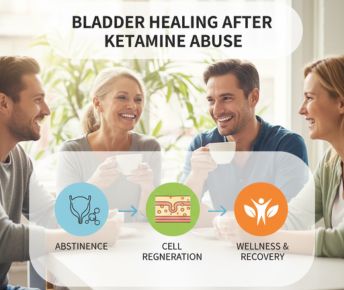
This is why ketamine bladder recovery is not all-or-nothing. Healing means reducing inflammation, restoring tolerable capacity, and preventing further injury.
How to Start Bladder Healing After Ketamine Abuse
The foundation of healing is simple, but not easy.
First, ketamine exposure must stop completely. Partial reduction does not allow repair. Spacing use does not protect healing tissue. Any continued exposure keeps inflammation active.
Second, the bladder needs consistency. Regular voiding, not constant “just in case” urination, helps retrain capacity. Holding urine excessively to “stretch” the bladder backfires and worsens pain.
Third, the nervous system needs calming. Stress increases bladder sensitivity. Anxiety tightens pelvic muscles. Sleep disruption worsens inflammation.
Bladder healing is not just a urological process. It is neurological.
Also Read: Ketamine Drug Abuse Party Drug in UK & Hong Kong
Dietary Changes That Support Bladder Healing After Ketamine Abuse
Diet does not cure bladder injury, but it can reduce irritation.
In early recovery, many people benefit from reducing:
- caffeine
- alcohol
- acidic foods
- artificial sweeteners
- very spicy foods
These substances increase bladder sensitivity, especially when the lining is inflamed.
Hydration matters, but excess water can worsen urgency. The goal is steady, moderate intake rather than constant sipping.
As healing progresses, tolerance often improves. Restriction does not need to be permanent.
Medications and Medical Support for Ketamine Addiction Treatment
For people experiencing significant pain or urgency, medical treatment can be helpful.
Depending on symptoms, doctors may prescribe:
- medications to calm bladder spasms
- agents that protect the bladder lining
- pain-modulating medications
- treatments that reduce nerve hypersensitivity
These treatments support healing. They do not replace stopping ketamine.
Urological follow-up matters, especially if symptoms persist or worsen. Monitoring prevents silent progression and helps tailor care.
Why Relapse Is Especially Harmful to the Bladder
Relapse after bladder injury is not neutral.
Each exposure restarts inflammation. Previously healing tissue becomes re-injured faster than before. Symptoms often return more severely after relapse than during initial use.
This is why people with ketamine bladder syndrome often report rapid deterioration after “just one time.” The bladder remembers the injury.
This is also why addiction support is not optional. Bladder healing depends on sustained behavioural change.
Psychological Recovery Matters Too
Many people used ketamine to regulate emotion, escape distress, or dissociate. When ketamine stops, those feelings return. Stress rises. Anxiety increases. The bladder reacts.
Ignoring this link slows recovery.
Bladder healing improves when emotional regulation improves. Therapy, nervous system regulation, and stable routines all reduce bladder sensitivity indirectly.
This is not psychosomatic. It is neuro-urological reality.
What Long-Term Healing Looks Like
Long-term healing is gradual. Improvements often appear in months, not weeks.
Success looks like:
- fewer nighttime bathroom trips
- longer intervals between urination
- reduced pain intensity
- improved quality of life
For some, full symptom resolution is possible. For others, management becomes the goal.
Both outcomes are valid forms of healing.
FAQs on Ketamine Abuse Bladder Healing
How does ketamine bladder syndrome develop?
Through repeated exposure of the bladder lining to ketamine metabolites, causing chronic inflammation, nerve hypersensitivity, and reduced capacity.
How does ketamine affect the bladder?
Ketamine irritates the bladder wall, disrupts nerve signalling, increases urgency, and over time causes structural and functional damage.
How can I start healing my bladder after ketamine abuse?
Stop ketamine completely, stabilise urination patterns, reduce bladder irritants, manage stress, and seek urological support if symptoms persist.
Are there any specific dietary changes I should make for bladder healing?
Reducing caffeine, alcohol, acidic foods, artificial sweeteners, and spicy foods can reduce irritation during early healing.
Are there any medications available to help with bladder pain or discomfort?
Yes. Medications can reduce spasms, calm nerve sensitivity, and protect the bladder lining, but they are supportive, not curative.
How can Samarpan help in Ketamine Abuse Recovery?
At Samarpan Recovery Centre, we frequently support individuals concerned about bladder healing after ketamine abuse, a process that can feel slow, uncertain, and deeply distressing if not handled correctly. Repeated ketamine use can inflame and damage the bladder lining, leading to persistent pain, urgency, reduced bladder capacity, and in severe cases, long-term complications. Healing begins only when ketamine use stops completely, which is why Samarpan places strong emphasis on medically supervised detox and structured rehabilitation to prevent further harm.
Once use has ceased, our team focuses on reducing inflammation, supporting nervous system regulation, and addressing the psychological dependence that often drives continued use despite physical pain. Through evidence-based therapies like CBT and DBT, combined with trauma-informed care, we help clients manage cravings, cope with discomfort, and rebuild healthier patterns. Bladder recovery is not just a physical process; it is closely tied to emotional safety, consistency, and sustained abstinence. At Samarpan, we provide the stability, clinical oversight, and compassionate support required to give the body the best possible chance to heal and the individual the confidence to recover fully.