


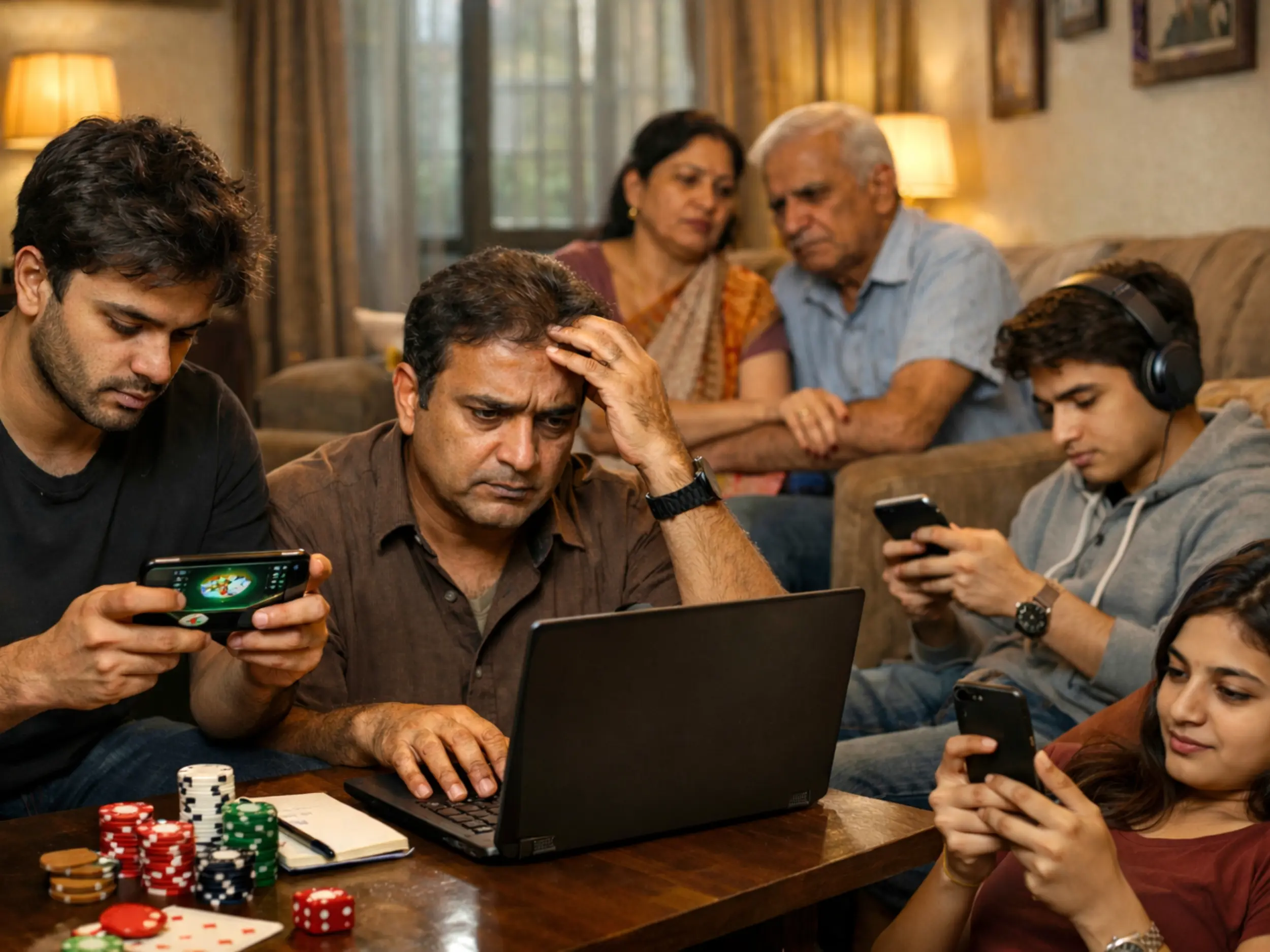



Digital addiction is often discussed as excess screen time, shortened attention spans, or teenagers glued to phones. This framing is outdated. The most consequential forms of digital addiction today do not centre on passive consumption. They centre on participation, risk, reward, and perceived control.
Gambling apps, trading platforms, gaming economies, and algorithm-driven feedback systems have transformed addiction into something quieter and far more defensible. These behaviours are rarely recognised as pathological because they are embedded in productivity, finance, skill-building, or “learning.” Families overlook them not out of neglect, but because the behaviours are socially sanctioned.
What Digital Addiction Actually Refers To
When people ask “what is digital addiction?”, they often expect a singular behaviour. In reality, types of digital addiction are diverse and expanding.
It refers to compulsive engagement with online systems that provide intermittent reinforcement, emotional regulation, or identity validation,despite negative consequences. The addiction is not to the device itself, but to what the device delivers.
This is why digital addiction and mental health are increasingly intertwined. These platforms do not merely occupy time; they shape emotional regulation, risk perception, and self-worth.
Gambling Without Casinos
One of the most visible yet under-recognised forms is online gambling addiction. Sports betting apps, fantasy leagues, and in-game wagering normalise risk-taking under the guise of entertainment.
The digital format removes friction. There is no physical venue, no social exposure, no pause. Gambling becomes continuous, private, and easily rationalised. This shift has dramatically increased accessibility while reducing perceived severity.
Families often fail to recognise the problem because the behaviour does not disrupt daily functioning,until it does.
Day Trading as a Behavioural Addiction
Trading addiction occupies a particularly ambiguous space. Day trading platforms frame themselves as educational, empowering, and skill-based. Users are encouraged to view losses as learning and persistence as discipline.
For some individuals, especially those predisposed to reward sensitivity, this becomes a behavioural loop indistinguishable from gambling. The market replaces the casino. Charts replace slot machines. Volatility becomes stimulation.
Because trading is associated with ambition and financial literacy, symptoms of digital addiction in this context are frequently dismissed as dedication.
Gaming, Loot Systems, and Soft Gambling
Digital gaming ecosystems increasingly incorporate reward mechanisms that mirror gambling structures. Loot boxes, timed rewards, and microtransactions rely on unpredictability rather than skill alone.
For adolescents, this contributes to digital addiction among teenagers that is mislabelled as enthusiasm or hobby. The concern is not gaming itself, but the replacement of internal regulation with algorithmic reward.
When gaming becomes the primary source of achievement, identity, or emotional relief, dependency is already forming.
Why Families Miss the Signs
Families tend to look for visible deterioration: academic decline, financial crisis, social withdrawal. Modern online addiction often avoids these markers for extended periods.
High-functioning individuals may maintain performance while privately escalating engagement. Adolescents may comply outwardly while disengaging emotionally.
This is why signs of digital addiction are subtle:
- preoccupation without satisfaction,
- irritability when interrupted,
- loss of interest in offline activities,
- sleep disruption,
- and increased secrecy around online behaviour.
These patterns are easily minimised because they resemble normal digital life.
Psychological Drivers Behind Digital Addiction
Understanding causes of digital addiction requires examining what these platforms provide.
They offer:
- instant feedback,
- clear metrics of success,
- novelty without risk of social exposure,
- and predictable reward loops.
For individuals experiencing uncertainty, stress, or emotional flatness, these systems become stabilising. Over time, reliance develops.
This is why digital addiction causes are rarely about weakness. They are about unmet regulatory needs.
Effects That Accumulate Quietly
The effects are not always dramatic. They accumulate.
Common consequences include:
- emotional blunting,
- reduced frustration tolerance,
- increased anxiety,
- sleep dysregulation,
- and difficulty disengaging from stimulation.
These effects often surface as mood issues rather than behavioural crises, further delaying recognition.
Treatment Requires Structural Change
Addressing digital addiction treatment is not about banning technology. Abstinence without replacement fails because the underlying need remains.
Effective intervention focuses on:
- restoring offline regulation,
- reducing access friction,
- introducing alternative reward systems,
- and rebuilding tolerance for boredom and uncertainty.
Families asking “how to deal with digital addiction?” often expect a rule-based solution. What works is relational, not punitive.
Adolescents and Early Intervention
In young people, early patterns matter. Digital addiction among teenagers often predicts adult behavioural dependency if unaddressed.
The goal is not control, but capacity-building. Adolescents require guided limits, not total freedom or total restriction.
This is why conversations must focus on function rather than fear.
FAQs
- What is digital addiction?
Compulsive reliance on digital platforms for regulation, reward, or identity despite negative consequences. - What are the symptoms of digital addiction?
Preoccupation, irritability, loss of interest in offline activities, sleep disruption, and secrecy. - How to get rid of digital addiction?
By addressing the function the behaviour serves and replacing it with healthier regulatory strategies. - How to deal with digital addiction in families?
Through structure, curiosity, boundary-setting, and support,not moralising or surveillance. - How to stop online gambling addiction?
By limiting access, addressing emotional triggers, and seeking professional intervention when needed. - How to stop online gaming addiction?
By reintroducing alternative sources of reward, reducing exposure, and restoring offline engagement.
How can Samarpan help?
At Samarpan Recovery Centre, we are increasingly seeing families overlook this addiction because it doesn’t look like traditional substance use. New-age patterns such as online gambling addiction, trading addiction, compulsive investing, excessive gaming, and constant screen dependence fall under growing types that quietly disrupt emotional regulation and daily functioning. The causes of addiction often include stress, performance pressure, loneliness, and easy access to high-dopamine digital platforms, leading to clear signs like secrecy, irritability, sleep disruption, financial risk-taking, and emotional withdrawal. These symptoms significantly affect mental health, increasing anxiety, impulsivity, and burnout, especially in teenagers and young adults. Samarpan provides structured digital addiction treatment that helps individuals understand the effects, address online addiction, and build healthier coping systems. Through therapy, routine rebuilding, and family involvement, we help clients break compulsive patterns and regain balance, clarity, and long-term stability.