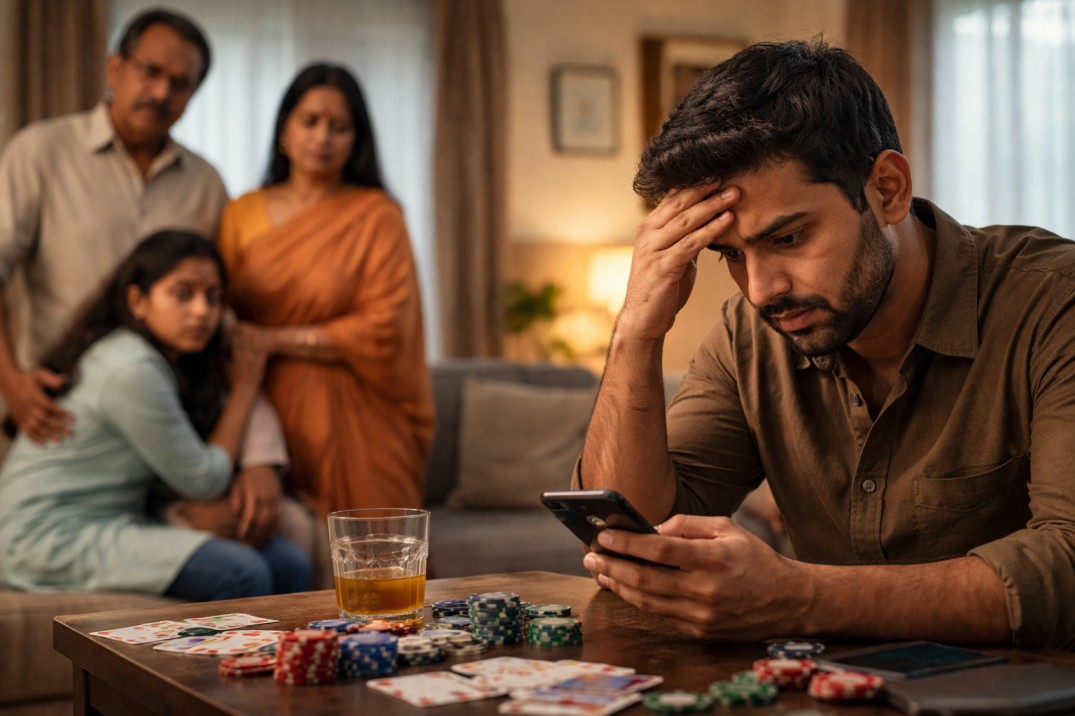






High-functioning gambling addiction is often imagined as visible collapse: financial ruin, job loss, family confrontation. This image is comforting, because it reassures the observer that addiction announces itself loudly. In reality, some of the most entrenched forms of gambling addiction operate quietly, embedded within routines that appear disciplined, successful, and controlled.
High-functioning gambling addiction does not contradict professional competence. It feeds on it. The same traits that sustain careers,risk tolerance, confidence, strategic thinking, emotional containment,can also conceal dependency.
This is why online gambling addiction among professionals is frequently identified late, long after behavioural patterns have stabilised.
What “High-Functioning” Actually Means in Addiction
The term does not imply mildness. It implies camouflage.
High-functioning individuals maintain employment, meet obligations, and often outperform peers. Their addiction does not disrupt output; it reorganises it. Gambling becomes compartmentalised,an activity conducted after hours, between meetings, or in private digital spaces.
When people ask what are the signs of gambling addiction, they are often looking for dysfunction. High-functioning addiction resists that template. The signs exist, but they are internalised.
The Professional Rationalisation Loop
One of the defining features of concealed gambling addiction is rationalisation.
Professionals often frame gambling as:
- a calculated risk,
- a stress outlet,
- a strategic challenge,
- or a controlled form of entertainment.
Losses are reframed as variance. Wins reinforce perceived skill. Because income remains stable, consequences appear abstract. This allows gambling addiction symptoms to progress without triggering external concern.
Control is not absent; it is overestimated.
Behavioural Patterns That Replace Red Flags
Instead of overt chaos, high-functioning gambling addiction produces subtler shifts.
Common patterns include:
- preoccupation with odds, markets, or games,
- irritability when access is interrupted,
- using gambling to regulate stress or emotional discomfort,
- increasing secrecy around finances or time,
- and a narrowing of leisure activities.
These behaviours rarely attract attention because they are easily absorbed into demanding schedules.
This is why knowing how to spot gambling addiction requires attention to function, not failure.
Online Platforms and the Illusion of Containment
Digital gambling environments are particularly conducive to concealment. Online gambling addiction thrives on privacy, speed, and accessibility. There is no physical venue, no social exposure, no visible marker of engagement.
Professionals can gamble from offices, homes, or during travel without disruption. The activity integrates seamlessly into daily life.
This integration delays recognition and complicates gambling addiction recovery, as the behaviour is deeply embedded in routine rather than isolated as an event.
Emotional Regulation, Not Entertainment
At its core, gambling addiction is rarely about money. It is about modulation.
High-functioning individuals often use gambling to manage:
- cognitive overload,
- work-related stress,
- emotional flatness,
- or a need for stimulation.
The behaviour becomes a private regulatory mechanism. Over time, reliance increases, and alternative coping strategies atrophy.
This is why attempts to simply stop gambling addiction through self-control frequently fail. The behaviour is serving a psychological function that must be addressed.
Why Help Is Delayed
Professionals are often the last to seek gambling addiction help. Shame plays a role, but so does identity.
Acknowledging addiction threatens the self-concept of competence and control. Many fear professional consequences or reputational damage. As a result, intervention is postponed until losses become undeniable.
By this stage, the addiction is no longer peripheral. It is structural.
Treatment Without Moral Collapse
Effective treatment for gambling addiction does not require humiliation or exposure. It requires precision.
Interventions focus on:
- understanding triggers,
- disrupting behavioural loops,
- rebuilding emotional regulation,
- and addressing distorted beliefs about control and probability.
Options range from gambling addiction therapy to structured programmes, including rehab for gambling addiction when patterns are entrenched.
The goal is not abstinence alone, but reorganisation.
Recovery Is a Process, Not a Personality Change
Gambling addiction recovery often challenges the belief that competence must be sacrificed for stability. In reality, recovery enhances decision-making, emotional range, and long-term performance.
Working with a gambling addiction therapist allows individuals to separate risk-taking as a professional skill from compulsive engagement as a coping strategy.
FAQs
- What is gambling addiction?
A behavioural addiction characterised by persistent gambling despite negative consequences, often used to regulate emotion or stress. - What are the signs of gambling addiction?
Preoccupation, secrecy, loss of control, increasing stakes, and reliance on gambling for emotional regulation. - How to spot gambling addiction in professionals?
Look for internal shifts,preoccupation, irritability, rationalisation,rather than external collapse. - What is gambling addiction treatment?
A combination of therapy, behavioural intervention, and sometimes residential programmes focused on restructuring habits and cognition. - How to stop online gambling addiction?
By addressing triggers, limiting access, replacing regulatory functions, and engaging professional support.
How can Samarpan help?
At Samarpan Recovery Centre, we often work with individuals whose gambling addiction stays hidden for years because they appear successful, disciplined, and high-performing on the outside. In cases of high-functioning gambling addiction, professionals may excel at work while quietly engaging in online gambling addiction, concealing debts, emotional distress, and loss of control. Knowing what are the signs of gambling addiction,such as secretive behaviour, chasing losses, irritability, or using gambling to regulate stress,is critical, especially when the problem is masked by status or routine. Samarpan helps families and individuals how to spot gambling addiction early and accurately, without judgment. Our approach combines specialised gambling addiction therapy, psychological assessment, and structured care within a supportive environment, making us a trusted option for gambling addiction help. For those needing intensive support, our rehab for gambling addiction and gambling addiction rehab programs address both behavioural patterns and emotional drivers. Guided by experienced clinicians and a dedicated gambling addiction therapist, Samarpan supports long-term gambling addiction recovery, helping individuals regain control, rebuild trust, and return to a balanced, grounded life.