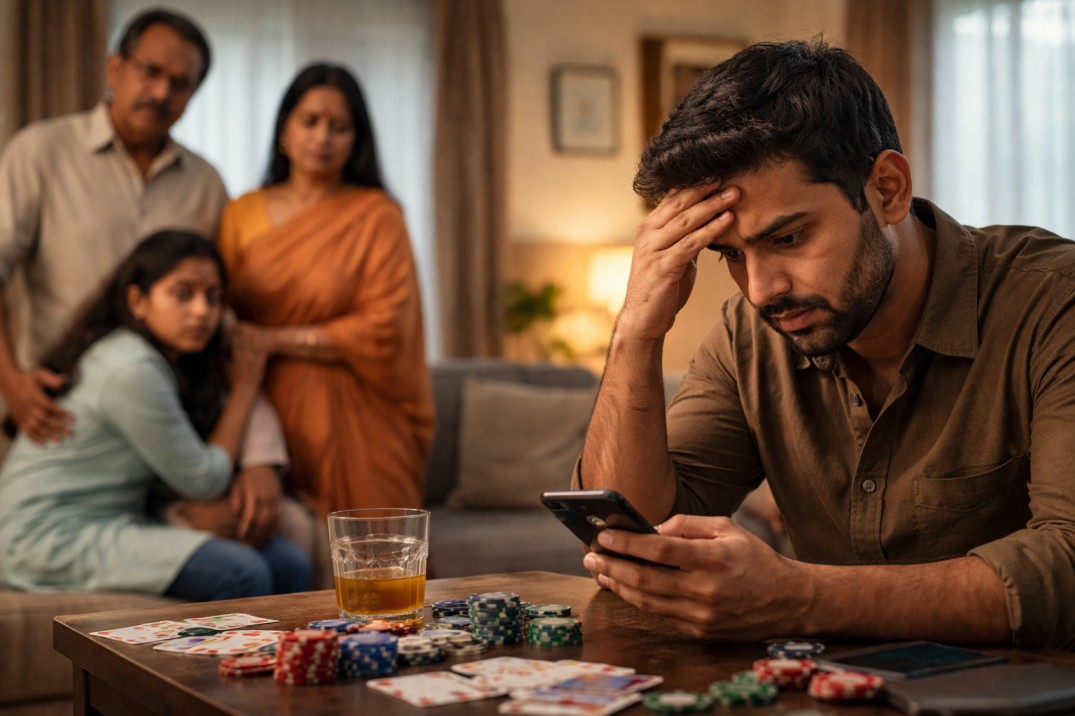


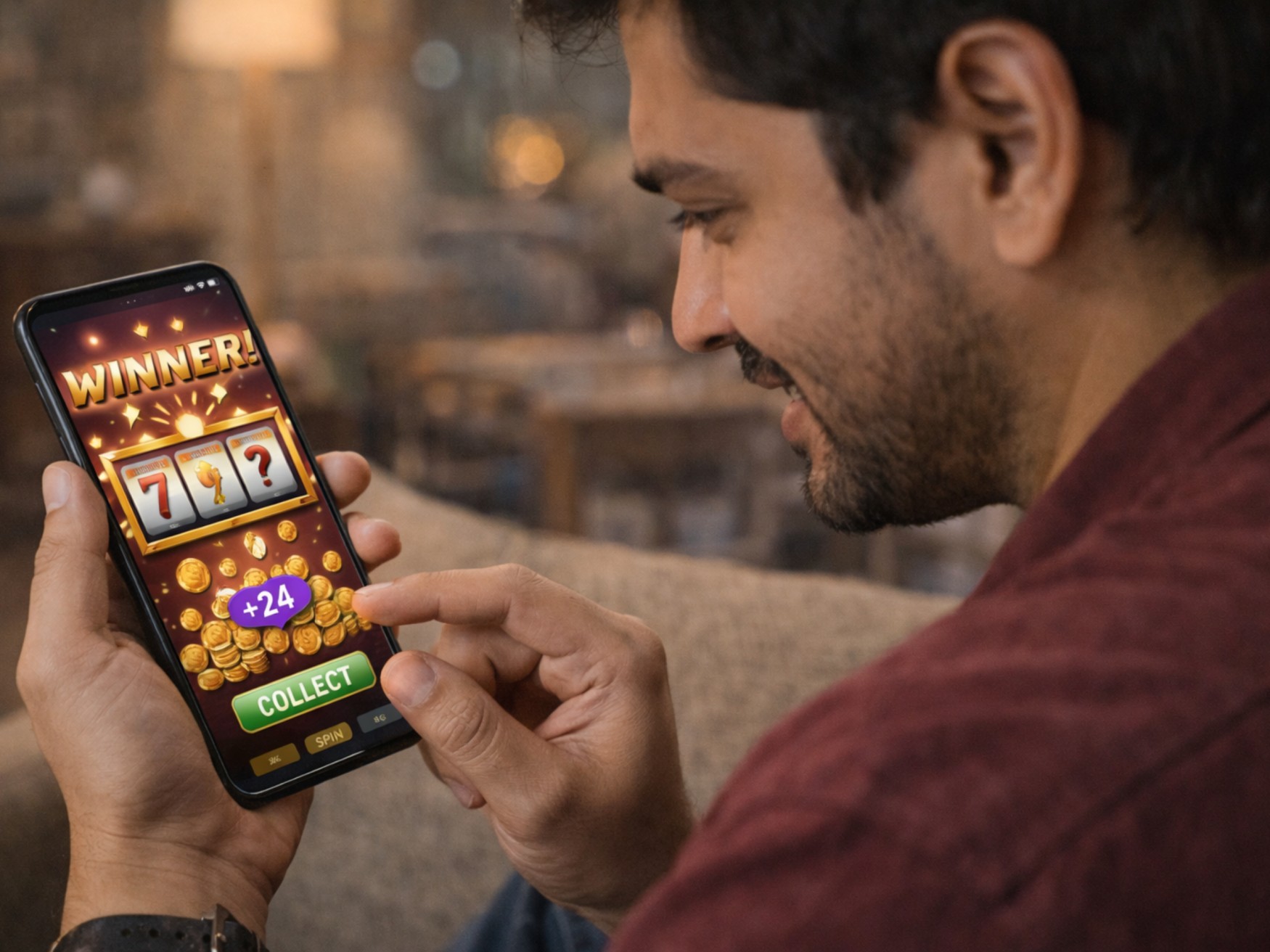



Gambling apps addiction does not rely on recklessness. They rely on compliance. The most effective gambling platforms are not designed for people who want to lose control; they are designed for people who believe they are still in control. This is why gambling apps rarely look like casinos. They look like games, dashboards, scoreboards, or financial tools. The interface reassures. The mechanics capture.
At the centre of this capture is a deceptively small mechanism: the micro-reward.
Micro-rewards are not jackpots. They are confirmations. Tiny, frequent signals that something has gone right enough to continue. And they are extraordinarily effective.
What Micro-Rewards Actually Are
Micro-rewards are low-value reinforcements delivered at high frequency. They include:
- small wins,
- near-wins,
- cashback credits,
- bonus coins,
- “almost there” progress bars,
- free spins,
- and streak acknowledgements.
They do not meaningfully change the user’s financial position. What they change is behavioural momentum.
In mobile gambling apps, these reinforcements appear constantly. Not to make users rich, but to keep them engaged just long enough to place the next bet.
This is not accidental. It is foundational.
Why Micro-Rewards Are More Addictive Than Big Wins
Large wins are destabilising. They interrupt play. They create reflection. They trigger withdrawal or exit.
Micro-rewards do the opposite. They maintain rhythm.
Behavioural psychology has known this for decades: variable reinforcement schedules create the strongest behavioural persistence. When rewards are unpredictable but frequent, the brain does not disengage to evaluate outcomes. It stays active, scanning for the next signal.
This is how gambling apps in India and elsewhere generate sustained engagement without dramatic payouts.
The goal is not satisfaction. It is continuation.
Near-Wins: The Most Dangerous Micro-Reward
A near-win is a loss presented as progress.
- Two matching symbols.
- One card away.
- A missed number by a margin that feels intentional.
Near-wins activate reward pathways more aggressively than clear losses. The brain interprets proximity as skill, not chance.
This is why online gambling apps in India often amplify visual and auditory feedback around near-misses. The app communicates: you were close. The user hears: I’m improving.
Neither is true.
Why Gambling Apps Feel Like Skill-Based Games
Most all gambling apps now blur the line between chance and competence.
- Leaderboards.
- Levels.
- Badges.
- “Expert” tiers.
These elements convert random outcomes into perceived mastery. Users begin to believe losses are temporary and wins are earned.
This is not how probability works. But it is how motivation persists.
The more a user feels responsible for outcomes, the harder it becomes to stop.
The Indian Context: Accessibility Without Friction
The rapid growth of gambling apps in India is not just about legality loopholes or market demand. It is about frictionless access.
- Low minimum bets.
- Instant deposits.
- Fast withdrawals (at first).
- Constant notifications.
- Language localisation.
These features reduce the psychological barrier between impulse and action. Micro-rewards then reinforce the behaviour immediately.
The result is a loop that feels harmless until it isn’t.
Social Gambling Apps and the Illusion of Safety
Social gambling apps often advertise themselves as safer alternatives because they involve virtual currency or “just for fun” mechanics.
This is misleading.
The reinforcement architecture is identical. The brain does not distinguish between simulated and real stakes when reinforcement schedules are the same.
For many users, social gambling becomes a training ground. When real-money apps enter the picture, the habit is already wired.
When Use Becomes Disorder
The transition from use to disorder is not marked by loss alone. It is marked by narrowing.
Users begin to:
- play longer than intended,
- chase micro-wins,
- interpret losses as strategy failures,
- return immediately after breaks,
- and feel restless without access.
This is when gambling disorder treatment becomes necessary , not because the person lacks discipline, but because the system has been designed to override it.
Why Willpower Fails Against App Design
Asking users to “just stop” misunderstands the problem.
These platforms are engineered environments. They use:
- behavioural economics,
- cognitive bias exploitation,
- and reinforcement psychology.
Once the loop is established, stopping requires interruption, not intention.
This is why gambling addiction treatment focuses on environment restructuring, cognitive reframing, and impulse interruption , not moral correction.
What Treatment Actually Targets
Effective gambling treatment programs do not start with money. They start with behaviour.
They work on:
- recognising reinforcement loops,
- interrupting automatic play,
- rebuilding tolerance for boredom,
- and restoring decision latency.
In more structured settings, gambling treatment centers provide containment , removing access while cognitive patterns are examined and rewired.
Recovery is not about resisting rewards. It is about unlearning what those rewards taught the brain to expect.
Are Gambling Apps Legal in India?
The question “are gambling apps legal in India” has no single answer.
Legality varies by state, by game classification, and by how platforms frame chance versus skill. Many apps operate in regulatory grey zones.
Legality, however, does not equal safety. Design harm is not mitigated by legal status.
Gambling Apps Are Not Neutral Tools
It is tempting to view apps as passive platforms misused by a minority. This is inaccurate.
Design creates behaviour. Repetition creates dependency. Micro-rewards create retention.
Understanding this shifts the conversation away from blame and toward accountability , both personal and systemic.
FAQs
- What are gambling apps?
Digital platforms that facilitate betting or wagering, often using reinforcement-based design to maintain engagement. - Are gambling apps legal in India?
Legality varies by state and game type; many operate in regulatory grey areas. - What is gambling addiction treatment?
Structured interventions that address behavioural loops, cognitive distortions, and impulse regulation. - What is the best treatment for gambling addiction?
A combination of cognitive therapy, behavioural interruption, and, when needed, residential or intensive outpatient care. - Do gambling treatment programs address app-based addiction specifically?
Yes , effective programs focus on digital triggers, reinforcement cycles, and access management.
How can Samarpan help?
At Samarpan Recovery Centre, we work closely with individuals affected by compulsive gambling patterns driven by gambling apps, including online gambling apps in India, mobile gambling apps, and social gambling apps that use constant micro-rewards to keep users hooked. Many people are unaware of how these platforms operate or even question are gambling apps legal in India, yet the psychological impact remains the same,dopamine-driven loops that fuel compulsive behaviour and escalate into a gambling disorder. Samarpan offers structured gambling addiction treatment that goes beyond surface-level habit control, addressing the emotional regulation issues, impulsivity, and cognitive distortions reinforced by exposure to all gambling apps. Our evidence-based gambling treatment programs combine psychotherapy, behavioural interventions, and relapse-prevention planning, helping clients regain control over urges triggered by app notifications and instant rewards. As one of India’s leading gambling treatment centers, Samarpan provides personalised gambling disorder treatment in a safe, technology-aware environment, supporting long-term recovery and healthier decision-making rather than short-term restraint.