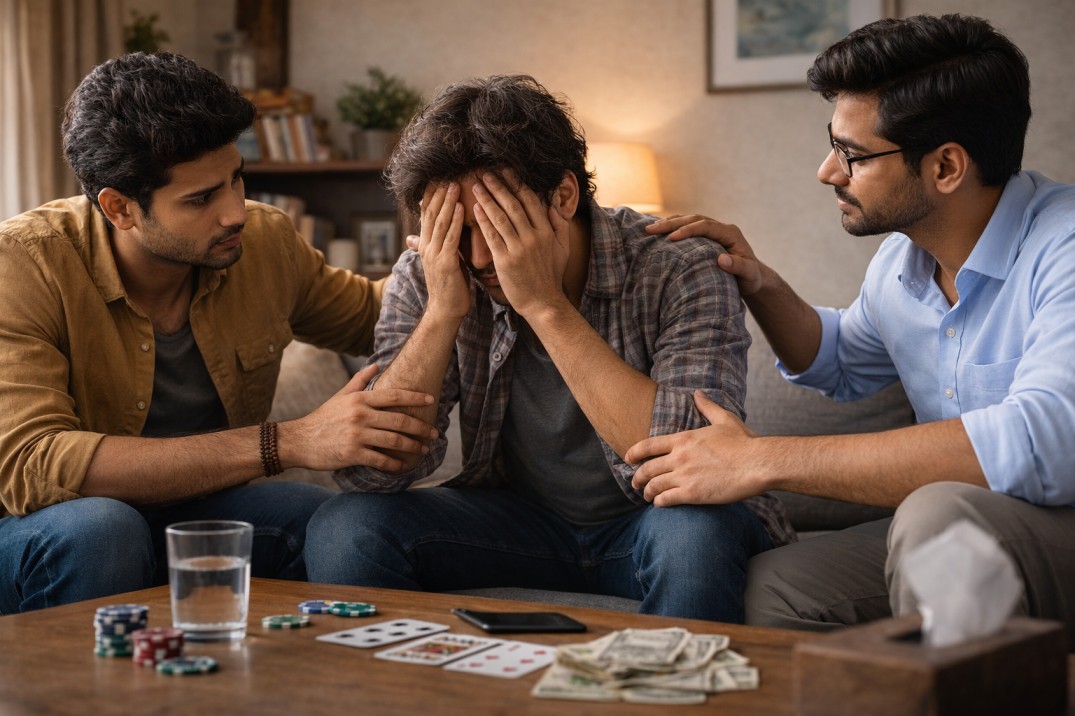






There is a peculiar cultural paradox: society commodifies desire, monetises intimacy, eroticises loneliness,yet when attachment becomes compulsive, when longing mutates into dependency, when sexuality is no longer expression but compulsion, the same society recoils. We applaud romance but pathologise need. We glamorise passion yet remain unequipped to discuss Compulsive Sexual Behaviour with intellectual sobriety.
Within this fissure,between appetite and affliction,emerges Sex and Love Addicts Anonymous, more commonly known as SLAA.
It is not a moral tribunal. It is not a confessional theatre. It is a recovery fellowship designed for individuals whose relationship with sex, love, fantasy, or emotional entanglement has transmuted into something unmanageable.
The Psychology Behind Sex and Love Addicts Anonymous
Before one understands sLAA meetings, one must understand the psychology that necessitates them.
Conditions such as Compulsive Sexual Behaviour disorder, often colloquially conflated with hypersexual disorder, are not simply about libido. They are about regulation. The behaviour,whether serial relationships, pornography, anonymous encounters, obsessive romantic attachment,functions as anaesthesia. It soothes abandonment panic. It regulates shame. It distracts from unresolved trauma.
Many individuals who seek therapy for sex addiction describe not pleasure, but compulsion. They describe an almost dissociative momentum,knowing a behaviour will injure them, yet pursuing it regardless. That is the axis upon which SLAA operates.
What Exactly Is Sex and Love Addicts Anonymous?
Sex and Love Addicts Anonymous is a twelve-step fellowship modelled structurally after Alcoholics Anonymous, yet adapted for those struggling with relational and sexual compulsivity. It is peer-led, donation-based, and globally accessible through both in-person and virtual formats.
Unlike clinical compulsive sexual behaviour disorder treatment, which occurs within therapy rooms or structured sLAA rehab environments, SLAA meetings are communal spaces where participants share experience rather than analysis. No one offers diagnoses. No one interrupts to interpret.
Members define their own “bottom lines”,behaviours that signal relapse. For some, this might involve compulsive texting of an unavailable partner. For others, pornography binges. For still others, serial infidelity or obsessive pursuit of emotionally unavailable individuals.
SLAA does not prescribe a universal template. It invites self-definition.
How Are Sex and Love Addicts Anonymous Meetings Structured?
A typical sLAA meeting follows ritual rather than spontaneity. Readings open the session. The twelve steps are acknowledged. Sharing proceeds in sequence.
There is no cross-talk,meaning no unsolicited advice, commentary, or debate. This boundary is deliberate. Many individuals entering recovery from Compulsive Sexual Behaviour disorder symptoms are habituated to chaos, triangulation, and emotional volatility. Structured sharing reintroduces containment.
Some meetings are topic-based: intimacy anorexia, fantasy addiction, trauma bonds. Others are open forums. Sponsorship,where a more experienced member guides a newcomer through the steps,forms the backbone of sustained sLAA recovery.
Who Benefits From SLAA?
The archetype is broader than most assume.
Those struggling with hypersexual disorder,excessive pornography, compulsive masturbation, anonymous sexual encounters,often find resonance.
Equally, individuals entangled in cyclical toxic relationships benefit profoundly. People who experience panic when single. Those who repeatedly pursue emotionally unavailable partners. Those who confuse intensity with intimacy.
In many cases, participants simultaneously engage in formal compulsive sexual behaviour disorder treatment while attending SLAA. The fellowship becomes adjunctive, not replacement.
How Does SLAA Help Break Unhealthy Relational Patterns?
The potency of SLAA lies not in doctrine but in recognition. When someone hears their private obsessions articulated by a stranger across the room, the illusion of uniqueness dissolves. Shame recedes. Accountability emerges.
The twelve-step framework encourages inventory,an unflinching examination of relational history. Not as self-flagellation, but as pattern recognition. Trauma bonds become visible. Attachment wounds acquire language.
Where clinical therapy may explore childhood antecedents, SLAA emphasises daily behaviour. Calls not made. Messages not sent. Fantasies interrupted. Sobriety redefined not as repression, but as congruence.
Is Sex and Love Addicts Anonymous Only for Extreme Cases?
No. Many participants function outwardly,successful careers, stable social reputations,yet internally oscillate between obsession and despair. Compulsivity need not be flamboyant to be destructive.
For some, SLAA serves as early intervention. For others, it follows legal, relational, or psychological collapse.
Long-Term Recovery Through Sex and Love Addicts Anonymous
Long-term sLAA recovery hinges on community. Isolation fuels compulsive behaviour. Community attenuates it.
Regular attendance cultivates rhythm. Sponsorship fosters accountability. Step work deepens self-awareness. Over time, behaviours once reflexive become choices.
Some individuals transition into sLAA rehab environments if behaviours are severe or co-occurring addictions exist. Others sustain recovery exclusively through meetings and therapy.
Conclusion
Sex and Love Addicts Anonymous exists for those whose relationship to desire has become tyrannical. It is for the individual who cannot distinguish between chemistry and safety. For the person whose attachments feel catastrophic rather than connective.
It is not about extinguishing sexuality. It is about disentangling compulsion from intimacy.
Recovery, within SLAA, is not asceticism. It is alignment.
Frequently Asked Questions
-
How does SLAA help people break unhealthy relationship patterns?
By fostering accountability, structured sharing, and step-based self-examination that identifies recurring relational behaviours and interrupts compulsive cycles.
-
Who usually benefits the most from joining SLAA?
Individuals experiencing compulsive sexual behaviour, obsessive romantic attachments, trauma bonds, or difficulty maintaining emotionally healthy relationships.
-
How are SLAA meetings structured and what happens in them?
Meetings follow a twelve-step format with readings, individual sharing, no cross-talk, and opportunities for sponsorship and step work.
-
Is SLAA helpful for people struggling with compulsive relationships or intimacy issues?
Yes. Many participants attend specifically for relational compulsions rather than overt sexual behaviours.
-
How does SLAA support long-term recovery from sex and love addiction?
Through community accountability, consistent attendance, sponsorship, and structured behavioural boundaries known as “bottom lines.”
How can Samarpan help?
Sexual compulsivity and attachment-driven dependency are often misunderstood, minimised, or moralised. Yet conditions such as hypersexual disorder and Compulsive Sexual Behaviour disorder are clinically recognised patterns that involve impaired impulse control, emotional dysregulation, and persistent relational distress.
Individuals struggling with repeated infidelity, compulsive pornography use, risky sexual behaviour, or obsessive romantic fixation are often navigating far more than “poor choices.” They are coping through behaviour.
At Samarpan, we approach these patterns through structured psychological assessment and evidence-based intervention. Whether a client is exploring Sex and Love Addicts Anonymous or seeking professional support beyond peer models, our team evaluates underlying trauma, attachment injuries, co-occurring mood disorders, and impulse-control vulnerabilities.
Many individuals presenting with Compulsive Sexual Behaviour disorder symptoms also experience shame, secrecy, anxiety, or depressive cycles that require integrated care.
For those interested in community-based recovery, we provide education around SLAA, its philosophy, and what participation entails. Clients are guided on how to attend SLAA meetings safely and meaningfully as part of broader treatment planning.
However, peer groups alone are not always sufficient. Structured Compulsive Sexual Behaviour therapy for sex addiction is often essential to address cognitive distortions, emotional triggers, and relational patterns driving the behaviour.
At our luxury rehabilitation centre in Mumbai and Mulshi, we offer individual psychotherapy, trauma-informed interventions, and relapse prevention planning tailored to compulsive intimacy patterns.
Where needed, we incorporate psychiatric evaluation and structured compulsive sexual behaviour disorder treatment within a contained residential setting.
For individuals requiring immersive support, SLAA rehab pathways can be integrated with clinical supervision rather than left entirely to self-navigation.
Recovery within SLAA recovery frameworks is strengthened when combined with psychological insight. At Samarpan, we do not frame sexual compulsivity as moral failure. We treat it as a behavioural addiction requiring structured intervention, emotional regulation training, and relational repair work.
Compulsive sexual and relational patterns thrive in secrecy and isolation. Sustainable change requires accountability, structured therapy, and a safe environment that allows shame to be processed rather than reinforced.
At Samarpan, treatment is grounded in dignity, clinical expertise, and long-term behavioural transformation.